What Landscaping and Drainage Problems Should You Fix Before Winter?
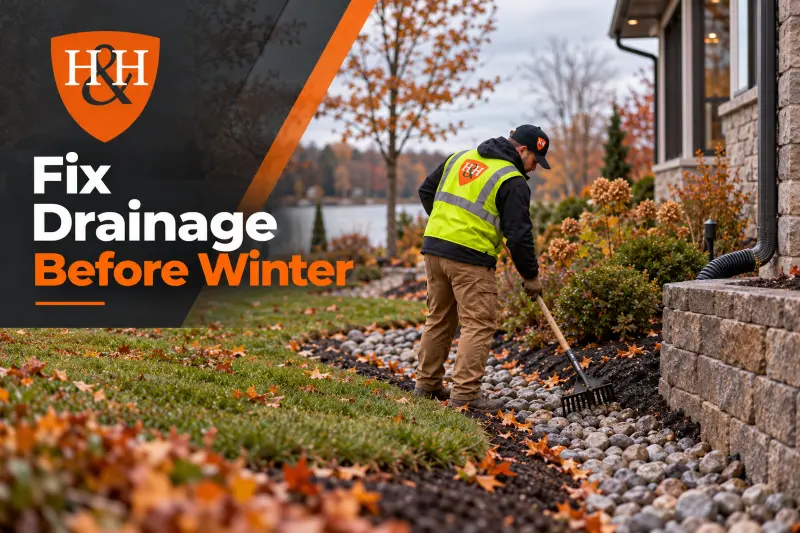
Summary: Fall drainage Minnesota property owners should address before winter includes standing water, poor grading, clogged drainage paths, erosion, unstable retaining walls, and damaged landscape areas. Fixing these problems before the ground freezes can reduce winter damage and help properties handle spring snowmelt more effectively.
What Landscaping and Drainage Problems Should You Fix Before Winter?
Fall is one of the best times to inspect how water moves across your property. Rain, fallen leaves, erosion, and changing temperatures can reveal problems that may become harder to address after the ground freezes. Minnesota properties also face another challenge. Snow that accumulates through winter eventually melts, creating a large amount of runoff in a relatively short period. H&H Contractors USA provides landscaping, grading, drainage correction, drain tile, erosion control, retaining walls, and land-clearing services for Minnesota properties. These services can help address water-management problems before winter conditions arrive.
Frequently Asked Questions About Fall Drainage in Minnesota

Should drainage problems be fixed before winter?
Yes, when possible. Standing water, poor grading, blocked drains, and erosion can worsen during freeze-thaw cycles and spring snowmelt. Addressing them in fall can also make repairs easier before the ground freezes.
What are signs of poor yard drainage?
Common signs include standing water, soggy soil, washed-out mulch, soil erosion, water near foundations, recurring low spots, and water collecting near retaining walls or walkways.
Can poor grading cause winter problems?
Yes. Soil that slopes toward buildings or hard surfaces can direct water into areas where it may freeze, refreeze, or contribute to drainage problems during spring thaw.
Should I repair erosion before winter?
Yes, especially where bare soil, runoff channels, or slope damage are visible. Stabilizing these areas before winter can help reduce additional soil movement during snowmelt.
Should retaining walls be checked before winter?
Yes. Look for leaning, movement, separated blocks, washed-out soil, or water collecting behind the wall. Drainage problems can increase pressure on retaining walls over time.
1. Fix Standing Water and Persistent Wet Areas
Standing water is one of the clearest signs that drainage is not working properly. Water may collect because of poor grading, compacted soil, blocked drainage routes, or inadequate drainage systems. Walk the property after a rainfall and note where water remains. Pay particular attention to areas near buildings, walkways, patios, retaining walls, and low sections of lawn. These areas can become more problematic during winter. Water may freeze, thaw, and refreeze as temperatures change. Spring snowmelt can add even more water to the same low areas.
2. Correct Grading That Sends Water the Wrong Direction

Grading controls how surface water moves across a property. Ideally, water should flow away from buildings and toward appropriate drainage areas. Look for soil that slopes toward foundations, garages, patios, or other structures. Also watch for areas where soil has settled since the original landscaping was completed. Even a small low area can collect substantial water during heavy rain or snowmelt. H&H specializes in grading and water-management solutions for residential and commercial properties. Their drainage services can include drainage correction and drain tile installation.
3. Clear Drainage Paths Before Leaves and Snow Build Up
Fall leaves can block drains, swales, culverts, and other water channels. A drainage system cannot work properly when its outlet is covered with debris. Inspect visible drainage structures and remove leaves, sticks, sediment, and landscape debris where appropriate. Do not overlook smaller drainage paths through landscaped areas. Mulch, soil, and plant debris can gradually change how water moves across the site. The Minnesota Stormwater Manual advises keeping drainage structures open and protecting disturbed soil before winter and spring melt conditions.
4. Address Soil Erosion Before Snow Covers It

Erosion often becomes easier to see in fall. Look for exposed soil, washed-out landscape beds, channels carved by runoff, or soil collecting downhill. These signs indicate that water is moving too quickly or concentrating in the wrong place. Erosion can continue during spring snowmelt, especially on slopes and areas without established vegetation. Before winter, consider whether the area needs grading, stabilization, drainage changes, erosion-control materials, or new plantings.
5. Inspect Retaining Walls for Drainage Problems
Retaining walls must handle both soil pressure and water. Poor drainage behind a wall can increase pressure as soil becomes saturated.
Before winter, look for warning signs such as:
- Leaning or bulging sections
- Separated blocks
- Soil washing out around the wall
- Standing water behind the wall
- Settling near the base
- Drainage outlets that appear blocked
Water trapped in soil can freeze and expand. Repeated freeze-thaw cycles may make existing movement more noticeable over time. H&H provides retaining-wall construction and landscape solutions designed for Minnesota conditions.
6. Look for Drainage Problems Around Downspouts
Roof runoff can send a surprising amount of water into one concentrated area. Downspouts that discharge too close to buildings or into low areas can contribute to pooling. Inspect where each downspout ends. Water should move away from structures and toward a suitable drainage area. Look for washed-out soil, standing water, eroded mulch, or channels developing beneath the discharge point. If these problems repeat after every heavy rain, a more permanent drainage solution may be appropriate.
7. Consider Whether Drain Tile Is Needed

Some properties need more than surface grading. Drain tile can help move excess water away from consistently wet or poorly drained areas. Drain tile may be worth discussing if water regularly collects in the same location despite basic grading and drainage improvements. It may also help where runoff must be redirected around landscaped areas or structures. The correct solution depends on soil conditions, elevation, water sources, and where the discharged water can safely go.
8. Repair Landscape Areas Damaged by Runoff
Drainage problems often show up in landscaping first. Mulch may wash away, plants may struggle, and soil can collect in unwanted areas. Replacing mulch alone will not fix the underlying issue if runoff continues to move through the same location. Start by identifying why the water is traveling there. Grading, edging, drainage channels, plant placement, or erosion-control measures may need adjustment. H&H provides landscaping services for residential and commercial properties throughout Minnesota.
9. Check Slopes and Hillsides Before Winter

Sloped properties require special attention because water naturally moves downhill. Bare soil or damaged vegetation can allow runoff to carry soil away. Look for ruts, exposed roots, washed-out areas, or sediment collecting at the bottom of slopes. These problems may indicate that the slope needs stabilization, erosion control, improved drainage, or landscaping changes. The Minnesota Stormwater Manual recommends stabilizing high-erosion areas before frozen conditions whenever possible.
10. Inspect Areas Where Snow Will Be Stored
Snow storage affects drainage more than many property owners realize. Large snow piles eventually release substantial amounts of water. Before winter, consider where plowed snow will be placed and where the meltwater will travel. Avoid locations that block drains, direct water toward buildings, or create puddles on walkways and parking areas. Commercial properties should include this in their winter maintenance planning. Our related article, What Should Be Included in a Commercial Snow Removal Plan?, explains more in depth why snow placement and drainage should be considered together.
Fall Landscaping and Drainage Checklist
| Problem Area | What to Look For | Possible Next Step |
|---|---|---|
| Low Areas | Standing water or soggy soil | Evaluate grading or drainage correction |
| Downspouts | Water collecting near structures | Redirect runoff to an appropriate area |
| Drainage Paths | Leaves, soil, or debris blocking flow | Clear and inspect the drainage route |
| Slopes | Ruts, exposed soil, or runoff channels | Consider stabilization or erosion control |
| Retaining Walls | Leaning, settling, or water buildup | Inspect drainage and wall condition |
| Landscape Beds | Washed-out mulch or soil movement | Correct water flow before restoring landscaping |
| Commercial Snow Areas | Piles located near drains or entrances | Plan safer snow-storage locations |
What Can Wait Until Spring?
Not every landscape improvement needs to be completed before winter. Cosmetic updates, some planting projects, and larger redesigns may be better suited to spring. However, active drainage problems deserve attention before they are hidden beneath snow. Take photos of problem areas while they are visible. Note where water collects and how runoff moves during rain. Those records can help when planning a larger spring project.
How Does Drainage Fit Into Overall Winter Property Preparation?
Drainage is only one part of preparing a Minnesota property for winter. Grading, retaining walls, concrete, access areas, and snow storage also matter. For a broader seasonal checklist, read our article, How Should Minnesota Properties Prepare for Winter? A Fall Property Checklist. Commercial properties should also coordinate drainage planning with snow removal. Snow piles can block drains or create refreezing problems when meltwater crosses paved surfaces.
Our related guide, When Should Minnesota Businesses Schedule Commercial Snow Plowing?, explains why preseason site planning matters.
Fix Drainage Problems Before Winter Hides Them
Fall gives Minnesota property owners a valuable opportunity to see drainage, grading, erosion, and landscape problems before snow covers them. Addressing these concerns now can help reduce standing water, erosion, soil movement, and spring runoff problems. H&H Contractors USA provides drainage correction, grading, drain tile installation, erosion control, retaining walls, landscaping, and related property services throughout Minnesota.
If your property has standing water, erosion, grading issues, or other drainage concerns, contact H&H Contractors USA to discuss the best solution before winter.

Published October 2026
Authored by Jacqueline McGreevey Expert Reviewer is Eric Hagen (owner)