Commercial Retaining Walls: What Minnesota Property Owners Should Know
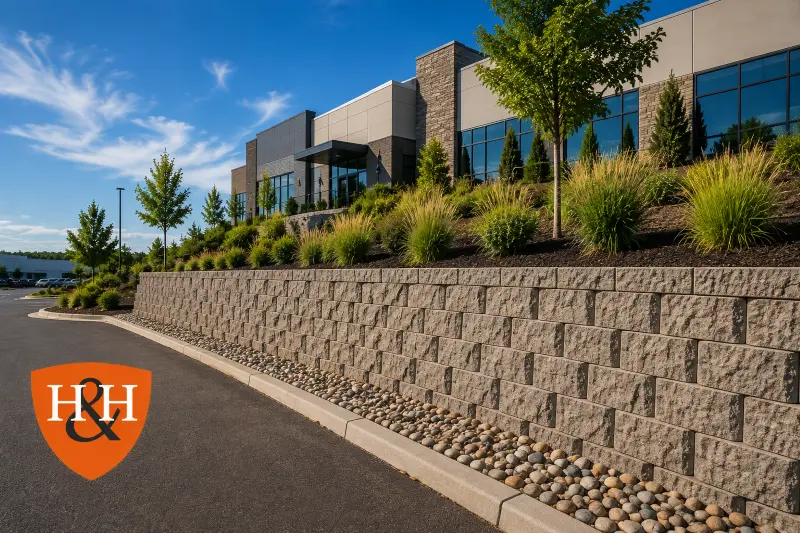
Commercial Retaining Walls Minnesota property owners invest in should do much more than improve appearance. A properly designed wall can stabilize slopes, manage elevation changes, control erosion, improve drainage, and create usable space. Minnesota’s freeze-thaw cycles and seasonal runoff make proper engineering, base preparation, compaction, and drainage especially important. Commercial property owners should consider the wall’s purpose, site conditions, traffic patterns, materials, and long-term maintenance before construction begins.
Commercial Retaining Walls Minnesota businesses depend on often solve several property challenges at once. A wall can stabilize a difficult slope while improving access or expanding usable ground. It can also define parking areas, walkways, entrances, landscaping, and outdoor gathering spaces. However, the visible wall represents only part of a successful installation. What happens behind and beneath the wall often determines how well it performs.
★★★★★ “Working with H&H contractors was a wonderful experience! I had them replace an old failing retaining wall that needed a better drain solution. In addition to, pouring a new concrete driveway and steps leading up to my front door. Their work was excellent. I go to the window every evening and admire how much I love their work. Nick Erickson was very responsive whenever I had a question or concern. He was great to work with through the whole planning process. His crew was always on time throughout the whole project from start to final clean-up. Even worked in the rain to get the job done! I have plans to use H&H for a few other projects and I would highly recommend them for any landscaping project you may have!” – Madi
What Do Commercial Retaining Walls Actually Do?
Commercial retaining walls hold soil at different elevations when a natural slope cannot remain stable or functional. However, their usefulness extends beyond soil retention. A well-planned wall can help organize large properties and improve how people move through them. Businesses may use walls to separate parking from landscaped areas. Apartment communities can create terraces between buildings, sidewalks, and recreational spaces. Retail properties can use walls around entrances or elevated planting beds. Industrial sites may need larger systems around loading areas, service roads, or elevation changes. Office properties can integrate retaining walls into outdoor seating and employee gathering spaces.
Commercial Retaining Walls Minnesota Properties Need for Drainage and Erosion Control
Water management deserves careful attention during every retaining wall project. Minnesota properties experience snowmelt, heavy rain, frozen soil, and repeated freeze-thaw cycles. Water trapped behind a wall creates pressure against the structure. Poor drainage can contribute to movement, bulging, settlement, or premature failure. H&H Contractors designs retaining walls with attention to the wall base, compaction, and drainage behind the structure. These hidden components help protect long-term performance.
Commercial sites require an even broader drainage strategy. Parking lots, roofs, sidewalks, and other hard surfaces create significant runoff. Water must move toward appropriate drainage areas without washing soil away or damaging nearby improvements. The University of Minnesota Extension recommends managing runoff through appropriate drainage routes and erosion-control practices. Property owners should consider water movement across the entire site, not only behind the wall.
Choosing a Retaining Wall System for a Commercial Property

Different commercial applications require different materials. H&H Contractors offers fieldstone boulders, natural stone, modular block, and large-block retaining wall options.
Large Block Retaining Walls
Large-block systems can work well for substantial elevation changes and large commercial sites. Their scale complements warehouses, industrial facilities, multifamily properties, and expansive parking areas. Large blocks can also create a clean appearance without making a substantial wall look visually busy. Site conditions still determine the appropriate wall system and construction requirements.
Modular Block Walls
Manufactured modular blocks offer consistent dimensions and numerous finish options. They work well around commercial entrances, offices, retail centers, and planned landscape areas. Designers can use color and texture to coordinate walls with buildings, sidewalks, signage, or other hardscape features.
Boulder and Natural Stone Walls
Boulder walls create a more natural appearance. They work especially well on wooded properties, larger campuses, hospitality sites, and Minnesota properties with natural landscapes. Boulders can also soften the transition between constructed spaces and surrounding vegetation. Strategic plantings can make the wall feel integrated into the property.
Create More Usable Space From Difficult Terrain

Slopes frequently consume valuable commercial property. Retaining walls can transform these areas into more functional spaces. Terracing can create level planting zones, pedestrian areas, gathering spaces, or improved access routes. A redesigned grade may also improve transitions between parking lots and buildings. Property owners should examine how people actually use the site before finalizing wall placement. A technically successful wall can still create problems when it interrupts pedestrian or maintenance routes. Consider snow storage, landscaping equipment, deliveries, emergency access, lighting, and future expansion during planning. These operational details can significantly influence the finished design.
Think Beyond the Wall Itself
A commercial retaining wall can become part of the property’s overall landscape architecture instead of standing alone. Integrated stairs can improve movement between elevations. Wide capstones may create informal seating in appropriate locations. Landscape beds can soften large wall surfaces. Low-voltage lighting can improve visibility near stairs and pedestrian routes. Contrasting materials can also visually distinguish important entrances or gathering spaces. For larger projects, consider surrounding improvements at the same time. H&H provides landscaping, grading, drainage, erosion control, patios, walkways, and related exterior services.
Explore H&H’s Landscaping Services to see how these features can work together.
Planning Before Construction Protects the Investment
Commercial walls require careful planning because the structure often interacts with other site systems. Utilities, stormwater drainage, pavement, structures, traffic, and neighboring properties can influence the design. H&H’s design-build process begins with consultation and project planning. The team evaluates project goals and develops a proposal before construction begins. For applicable projects, H&H can also provide scaled visual designs. This process helps stakeholders review layouts and make adjustments before crews break ground. Property managers should also determine whether engineering, permits, or municipal approvals apply to their project. Requirements vary by location and wall characteristics.
Why Professional Installation Matters in Minnesota

The most attractive retaining wall will not compensate for poor preparation. Proper excavation, base construction, compaction, drainage, and installation protect structural performance. Minnesota weather makes these details particularly important. Moisture can enter soil and freeze. Expanding frozen soil can place considerable pressure on improperly constructed hardscapes. H&H builds retaining walls according to applicable engineering and manufacturer specifications. Their process emphasizes both the visible finish and the structural components behind it.
Learn more about available materials and installation considerations on the Retaining Walls & Steps page.
Plan Your Commercial Retaining Wall With H&H Contractors
A commercial retaining wall should solve the property’s immediate challenge while supporting its long-term use. Successful projects combine structural planning, drainage, durable materials, and thoughtful design. H&H Contractors works with Minnesota residential and commercial property owners on retaining walls and comprehensive landscape improvements.
If your property has erosion, drainage, slope, or usable-space challenges, start with a professional site evaluation. Contact H&H Contractors to discuss your commercial property and request an estimate.
Frequently Asked Questions About Commercial Retaining Walls

What are commercial retaining walls used for?
Commercial retaining walls stabilize slopes, control soil movement, manage elevation changes, improve drainage, and create more usable property.
Which retaining wall material works best for commercial properties?
The best material depends on wall height, soil, drainage, appearance, budget, and site requirements. Options include boulders, natural stone, modular blocks, and large blocks.
Why is drainage important behind a retaining wall?
Drainage helps prevent water pressure from building behind the wall. Proper water management can reduce movement and premature structural problems.
Can a retaining wall create additional usable commercial space?
Yes. Retaining walls can terrace slopes and create level areas for landscaping, walkways, gathering areas, or other property uses.
Do commercial retaining walls need engineering or permits in Minnesota?
Some projects may require engineering, permits, or local approvals. Requirements depend on wall dimensions, location, loads, and local regulations.
How long can a professionally installed retaining wall last?
A properly designed wall can perform for decades. Quality materials, base preparation, compaction, drainage, and maintenance all affect longevity.
Build a Commercial Retaining Wall That Works for Your Property
A retaining wall should solve problems today while protecting your commercial property for years to come. H&H Contractors combines thoughtful planning, proper drainage, durable materials, and experienced installation to create walls built for Minnesota conditions.
Whether you need to stabilize a slope, control erosion, improve drainage, or reclaim usable space, now is the time to plan. Early planning also gives your team time to evaluate materials, site conditions, access, and related landscape improvements.
Ready to discuss your commercial property? Contact H&H Contractors today to schedule a consultation and start planning a retaining wall solution designed around your site.

Published September 2026