Commercial Concrete Repair or Replacement: What Property Owners Should Know
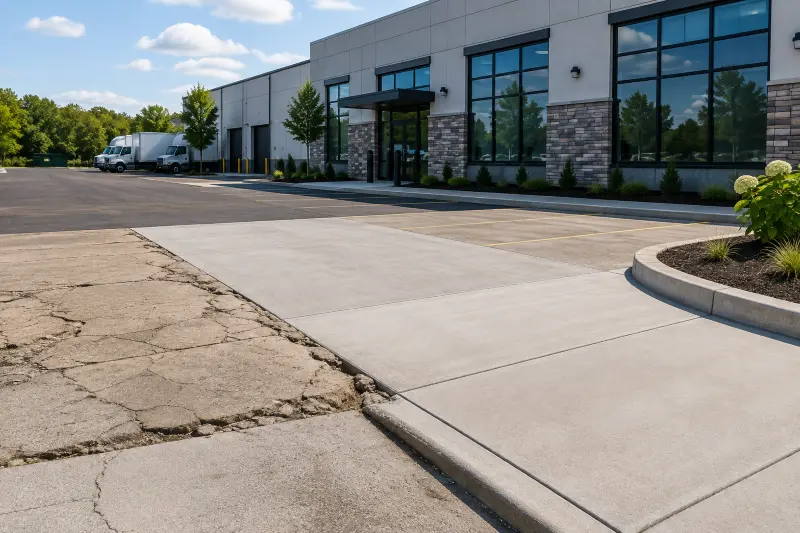
Commercial Concrete Repair can restore damaged sidewalks, aprons, steps, and other concrete surfaces when deterioration remains localized. However, replacement often provides better long-term value when slabs have extensive cracking, settlement, drainage problems, or structural deterioration. Minnesota property owners should evaluate the cause, depth, location, and extent of concrete damage before deciding how to proceed.
Commercial Concrete Repair should address more than appearance. Cracked, uneven, or deteriorating concrete can affect pedestrian safety, vehicle access, drainage, and a property’s professional appearance. Minnesota’s freeze-thaw cycles add another challenge. Water can enter vulnerable areas, freeze, expand, and contribute to continued deterioration.
★★★★★ Reasonable price
“From beginning to end of the project, I knew I had chosen the right contractor. All the employees that I came in contact with were dedicated to completing the job to my satisfaction. They started the project ahead of schedule and finished ahead of schedule. Changes throughout the project that I requested were priced fairly. Final inspection items at the end of the project were completed in a timely manner. Even after I paid them in full and discovered a couple of items that needed to be modified, they never hesitated in getting out to the house and completing the work. That in itself is a sign of a contractor that you want to work with on your next project.” – David
Services: Walkway landscaping, Concrete masonry
When Does Commercial Concrete Repair Make Sense?
Not every crack means a concrete slab needs complete replacement. Localized deterioration can sometimes be repaired when the surrounding concrete remains stable. Small areas of surface deterioration, isolated spalling, and certain nonmoving cracks may be candidates for repair. The condition beneath the concrete matters just as much. For example, repairing a damaged surface will not solve an unstable base. The problem can return when settlement or water movement caused the original damage. The American Cement Association provides helpful information about concrete placement, jointing, finishing, and freeze-thaw durability. Proper construction practices influence how exterior concrete performs over time.
When Replacement Becomes the Better Investment

Replacement often makes more sense when damage affects a significant portion of the concrete. Multiple interconnected cracks can indicate broader deterioration. Sunken or tilted slabs also deserve careful evaluation. They can create trip hazards and interfere with drainage or snow removal. Replacement may also provide better value when previous repairs repeatedly fail. Continually patching deteriorated concrete can become expensive without solving the underlying problem. Property owners should also consider the remaining concrete’s age and condition. Replacing a failing section can provide a cleaner transition and more predictable performance.
Look for the Cause Before Fixing the Concrete
One of the most important decisions happens before demolition or repair begins. Determine why the concrete failed. Water often plays an important role. Poor grading can direct runoff beneath or alongside a slab. Repeated saturation can weaken supporting soils and contribute to settlement. Commercial properties create additional challenges because roofs, parking areas, and walkways can generate significant runoff. Drainage should move water away from vulnerable surfaces. Tree roots, poorly compacted soil, heavy loads, and inadequate base preparation can also affect concrete performance. Fixing the source helps protect the new work.
Commercial Concrete Areas That Deserve Regular Attention
Different areas of a commercial property experience different loads and hazards. Property managers should inspect concrete as part of routine exterior maintenance.
Sidewalks and Pedestrian Routes
Sidewalks often deserve priority because employees, customers, tenants, and visitors use them daily. Uneven surfaces can create avoidable trip hazards.A broomed or otherwise textured finish can also improve traction on exterior concrete. This becomes particularly valuable during Minnesota’s wet and icy seasons.
Concrete Aprons and Vehicle Transitions

Aprons near garages, loading areas, and parking lots experience vehicle loads and repeated traffic. Settlement can create uncomfortable transitions and drainage problems. Commercial vehicles can place substantially different demands on concrete than ordinary passenger vehicles. Intended use should influence project planning.
Steps and Building Entrances
Damaged steps can affect both safety and curb appeal. Crumbling edges, uneven risers, or settlement should receive prompt attention.
Entrance improvements also provide an opportunity to coordinate concrete with surrounding landscaping, lighting, handrails, and pedestrian routes.
Minnesota Weather Changes the Concrete Conversation
Minnesota’s climate makes proper concrete design especially important. Freeze-thaw exposure can stress concrete when moisture enters the material. Air-entrained concrete can improve freeze-thaw durability by providing microscopic spaces for freezing water to expand. Proper curing also supports strength development. Joint placement matters as well. Concrete naturally contracts as it hardens. Properly designed joints help control where cracking occurs instead of leaving it completely random. Base preparation remains equally important. Northern climates experience frost action in the underlying soil. Freezing can cause heaving, while spring thaw can soften supporting soils.
Think Beyond the Immediate Repair
Commercial concrete work can become part of a larger exterior improvement strategy. Replacing a walkway may create an opportunity to correct drainage or improve landscaping. A redesigned entrance could combine concrete steps with planting areas or retaining walls. A commercial apron project could also improve grading around the building.H&H provides broader landscaping services that can complement concrete improvements. Coordinating projects can create a more functional and cohesive property.
Properties with elevation challenges may also benefit from professionally designed retaining walls and steps. These features can help manage slopes while improving pedestrian access and landscape organization. Commercial-landscaping
Plan the Project Around Commercial Operations
Commercial concrete projects require more logistical planning than many residential projects. Businesses may need to maintain customer access throughout construction. Property managers should identify delivery routes, employee entrances, emergency access, and high-traffic periods before work begins. Phased construction may help larger properties remain operational. Temporary pedestrian routes may also become necessary around active work zones. H&H’s project process begins with a consultation and proposal. Their team then coordinates timelines, materials, utilities, construction, and a final walkthrough. That planning matters on commercial sites because downtime can affect employees, tenants, customers, and daily operations.
Frequently Asked Questions About Commercial Concrete Repair

Should cracked commercial concrete always be replaced?
No. Localized cracks may be repairable when the surrounding slab and supporting base remain stable.
When should commercial concrete be replaced instead of repaired?
Replacement may be appropriate for extensive cracking, major settlement, widespread deterioration, recurring repairs, or significant base problems.
Why does commercial concrete become uneven?
Settlement can result from drainage problems, soil movement, poor compaction, frost action, tree roots, or repeated heavy loads.
Can drainage problems damage commercial concrete?
Yes. Poor drainage can saturate supporting soils, contribute to settlement, and increase freeze-thaw problems around concrete surfaces.
What commercial concrete areas should property owners inspect?
Inspect sidewalks, steps, entrances, aprons, loading areas, pedestrian routes, and other high-traffic concrete surfaces regularly.
Can concrete replacement be coordinated with landscaping improvements?
Yes. Coordinating grading, drainage, retaining walls, steps, and landscaping can address several exterior property concerns within one plan.
Repair the Problem, Not Just the Surface
Damaged commercial concrete rarely improves on its own. Addressing problems early can help property owners protect safety, accessibility, drainage, and curb appeal. The right solution starts with understanding why the concrete failed. From there, H&H Contractors can help determine whether repair, replacement, or broader site improvements make sense.
Don’t wait until damaged concrete becomes a larger property problem. Contact H&H Contractors today to discuss your commercial concrete needs and request an estimate. Build a safer, more functional property with improvements planned for Minnesota conditions.

Published September 2026