Can Concrete Retaining Walls Handle MN’s Harsh Weather?
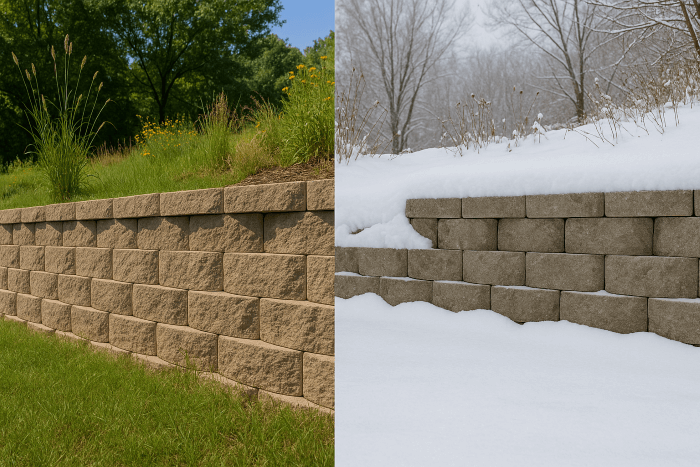
Concrete retaining walls MN homeowners choose are built to withstand freezing winters, heavy rains, and seasonal temperature swings. With the right design, materials, and drainage, they protect your property, add beauty, and increase value for decades.
Why Concrete Retaining Walls Are Ideal for Minnesota
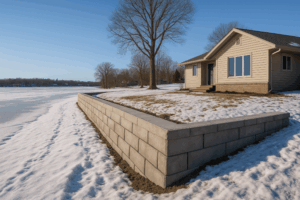
Minnesota’s climate challenges outdoor structures with extreme cold, snow, ice, and freeze-thaw cycles. Concrete retaining walls provide unmatched durability and stability in these conditions.
Properly engineered walls resist cracking, shifting, and erosion damage, making them a long-term investment in both property protection and aesthetics.
Types of Concrete Retaining Walls
- Gravity Walls: Use mass and weight to resist soil pressure, ideal for smaller height applications.
- Reinforced Concrete Walls: Contain steel reinforcement for additional strength against heavy loads.
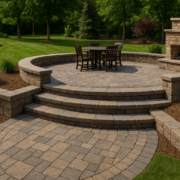
- Segmental Retaining Walls: Modular concrete blocks that lock together, allowing flexibility in design.
- Precast Concrete Walls: Manufactured off-site for faster installation and consistent quality.
- Decorative Concrete Walls: Combine structural strength with custom textures and finishes to match landscaping.
Each type serves specific functional and aesthetic goals, ensuring the best fit for your property’s layout and soil conditions.
Benefits for Home Value, Function, and Aesthetics
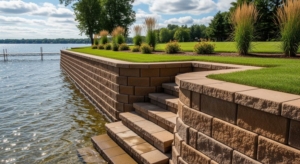
Concrete retaining walls improve land usability, prevent soil erosion, and enhance curb appeal. They create terraced gardens, define outdoor living areas, and protect structures from slope movement.
According to the Natural Resources Conservation Service, proper erosion control significantly preserves property value over time.
Insights from Houzz Magazine confirm that well-designed hardscapes boost resale potential while adding visual appeal.
Weather Challenges and How to Overcome Them
Freeze-thaw cycles can cause poorly built walls to crack or shift. Using air-entrained concrete, proper drainage, and frost-depth footings helps prevent damage.
Heavy rain and snowmelt create hydrostatic pressure behind walls. Installing drain tiles and weep holes relieves pressure and extends the wall’s lifespan.
Customer Experience Spotlight
“From beginning to end of the project, I knew I had chosen the right contractor. All the employees that I came in contact with were dedicated to completing the job to my satisfaction. They started the project ahead of schedule and finished ahead of schedule. Changes throughout the project that I requested were priced fairly. Final inspection items at the end of the project were completed in a timely manner. Even after I paid them in full and discovered a couple of items that needed to be modified, they never hesitated in getting out to the house and completing the work. That in itself is a sign of a contractor that you want to work with on your next project.”
– David H.
FAQ: Concrete Retaining Walls MN
- How long do concrete retaining walls last in Minnesota?
- With proper installation and maintenance, they can last 50 years or more.
- Do retaining walls need drainage in MN?
- Yes. Drainage prevents water pressure buildup, which can cause wall failure over time.
- Can decorative finishes be added to a concrete retaining wall?
- Absolutely. Stamped, stained, or textured finishes enhance the look while maintaining strength.
- Are permits required for building a retaining wall?
- In most cases, yes. H&H Contractors handles permitting to ensure compliance with local codes.
- What is the biggest challenge for retaining walls in Minnesota?
- Freeze-thaw cycles and water management are the primary challenges, but proper engineering prevents issues.